
%201.svg)
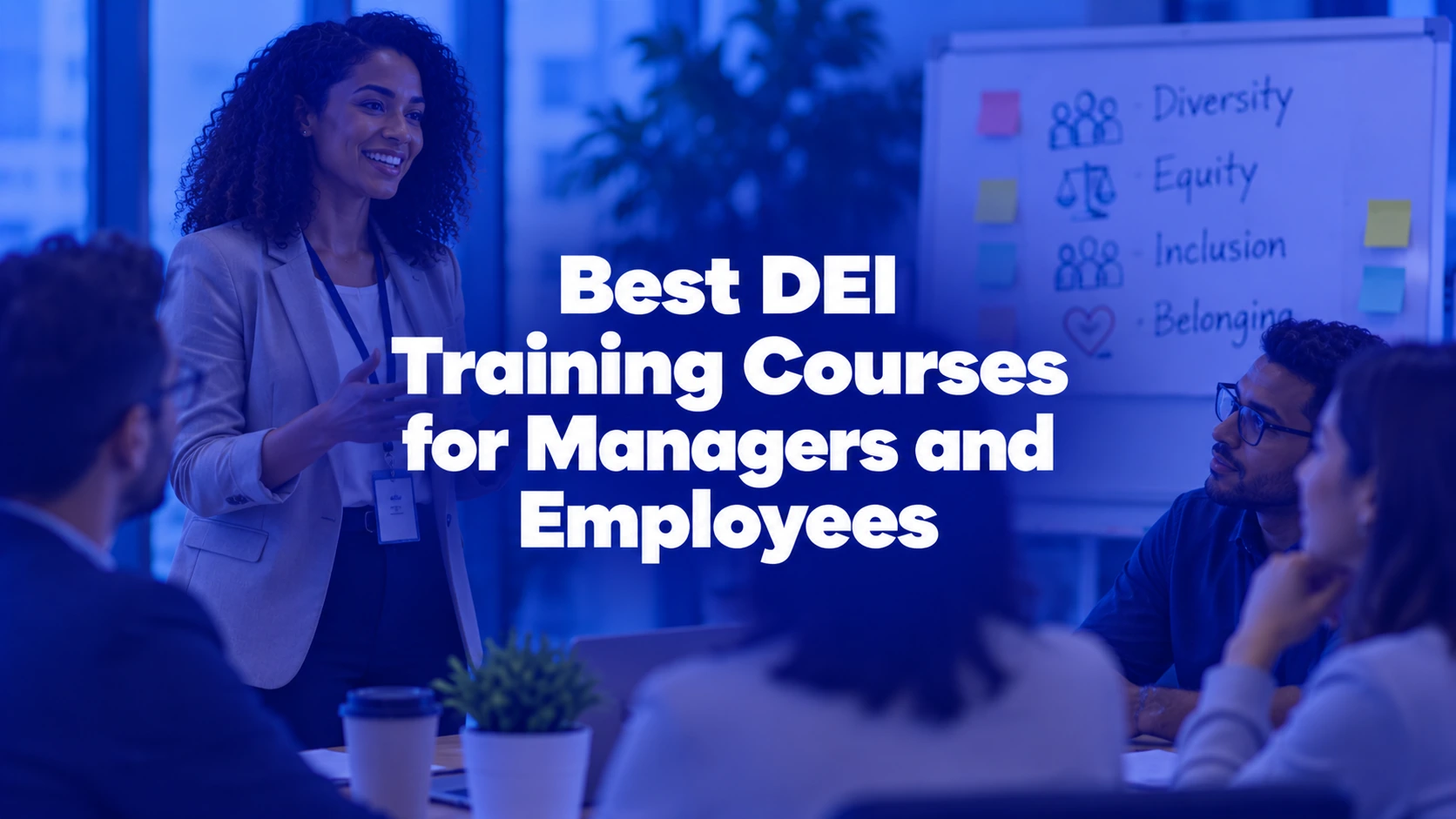
The strongest workplace DEI training in 2026 separates two different jobs: helping employees understand anti-discrimination, harassment, complaint and accommodation expectations, and helping managers build fair, consistent, inclusive workplace practices. Those goals can overlap, but they are not interchangeable. Buyers should choose content by audience, behavior, legal context, practice depth and delivery requirements rather than treating every course labeled DEI as equivalent.
What DEI Training Should Cover in 2026
For general employees, useful workplace inclusion training can address respectful communication, bias awareness, cultural competence, bystander behavior, complaint channels and the organization's conduct expectations. EEOC training guidance also recommends explaining anti-discrimination policies, employee rights and responsibilities, complaint procedures and policy changes.
Managers need additional decision-making skills because they influence hiring, onboarding, assignments, feedback, promotion, accommodations and team climate. Manager content should emphasize objective criteria, consistent processes, evidence-based decisions, constructive feedback, early issue recognition and when to involve HR or another designated resource.
Keep broader inclusion learning distinct from mandatory harassment or discrimination training where a jurisdiction requires specific content, timing, duration or supervisor modules. Use the harassment prevention training requirements guide, compliance training program, and mandatory compliance training guide to map those obligations separately.
How We Evaluated DEI and Inclusion Training Options
We compared current options on audience fit, practical behavior, manager versus employee depth, delivery format, reinforcement, accessibility, administration and current provider evidence. We did not independently complete every course, and we do not treat provider marketing claims as proof of workplace outcomes.
For sourcing, use the corporate training content marketplace, course categories, content sourcing for buyers, and training content curation to compare multiple options against the same criteria.
DEI and Inclusion Training Options to Benchmark
| Option | Current Published Scope | Best Fit | Main Buyer Check |
|---|---|---|---|
| TraineryXchange DEI & Inclusion Course Options | Marketplace options vary by publisher and course | Teams comparing multiple options before licensing | Check the selected publisher, version, scope, language, delivery and role fit |
| LinkedIn Learning: DEIB for Leaders and Managers | 8 courses, 7 hours | Manager and leadership development | Path is scheduled to update Nov 2, 2026, so confirm the assigned version |
| LinkedIn Learning: DEIB for All | 5 courses, 4 hours | Broad employee foundation | Pair general concepts with company policy and reporting procedures |
| LinkedIn Learning: Foundations of DEIB | 39-minute foundational course with exercises and four quizzes | Employees needing a shared vocabulary | General learning, not a substitute for jurisdiction-specific compliance training |
| Traliant Inclusive Management | Two 15-minute manager courses plus reinforcement | Managers making hiring, onboarding, feedback and team decisions | Confirm the exact modules, customization and legal-review process for your workforce |
| Traliant Cultural Competence | 30-minute course | Employees and managers working across cultures | Cultural competence is narrower than a full DEI or EEO program |
| EasyLlama Diversity and Inclusion Training | 35-minute core course; 100+ languages; broader DEI course library and assignment workflows | Organizations prioritizing administration and compliance workflows | Verify the exact courses, runtimes, jurisdictions and legal review relevant to your employees |
1. TraineryXchange DEI & Inclusion Course Options
Start with TraineryXchange when the goal is to compare several dei options before committing to one publisher. The live TraineryXchange catalog search gives HR, L&D, EHS, and procurement teams a single sourcing workflow for reviewing available courses and delivery choices.
TraineryXchange is the marketplace layer, not one fixed proprietary course. The publisher, runtime, version, language, certification or skills requirements, and delivery format depend on the course selected, so the final choice should still be checked against the same criteria used for the providers below.
2. LinkedIn Learning: Diversity, Equity, Inclusion and Belonging for Leaders and Managers
LinkedIn Learning's current leader and manager path contains eight courses and seven hours of content. It focuses on cultural competence, equitable practices and actions leaders can take on teams. LinkedIn notes that the path will be updated on November 2, 2026, so enterprise buyers should verify which version employees will receive.
Best for: Managers who need inclusion skills inside a broader leadership pathway. Trade-off: The path is not a substitute for organization-specific policy, complaint procedures or required jurisdictional harassment prevention training.
3. LinkedIn Learning: Diversity, Equity, Inclusion, and Belonging for All
DEIB for All is currently a five-course, four-hour learning path covering diversity, inclusion, belonging, equity, allyship and inclusive mindset topics.
Best for: Broad employee populations that need a common foundation. Trade-off: Employers should add their own anti-discrimination policy, reporting channels, accommodation processes and conduct expectations.
4. LinkedIn Learning: Foundations of Diversity, Equity, Inclusion, and Belonging
Foundations of DEIB is currently published at 39 minutes. It covers bias, inclusive communication, mentorship, sponsorship, belonging, workplace equity and related practices, with an exercise file and four quizzes.
Best for: Employees who need a shared vocabulary before deeper role-based learning. Trade-off: Foundational awareness alone does not prove behavior change or legal compliance.
Compare Inclusion Training by Audience and Workplace Need
Separate employee foundations, manager decision skills and mandatory compliance requirements before choosing content.
5. Traliant Inclusive Management
Traliant Inclusive Management currently includes two 15-minute foundational manager courses: Hiring and Onboarding, and Managing Diverse Teams. The provider also lists ten reinforcement micro reels. The modules emphasize objective hiring, structured onboarding, feedback, consistent expectations, active listening and collaboration.
Best for: Managers who need concrete decision practices. Trade-off: Buyers should verify customization, legal review, tracking and how the content fits their own policies and employment processes.
6. Traliant Cultural Competence
Traliant Cultural Competence is currently a 30-minute course for employees and managers. It focuses on how culture shapes workplace behavior and on communicating respectfully across cultural differences.
Best for: Teams working across cultures or geographies. Trade-off: Cultural competence is one capability area and should not be mistaken for a complete anti-discrimination, harassment or manager-development program.
7. EasyLlama Diversity, Equity and Inclusion Training
EasyLlama Diversity and Inclusion Training is currently published at 35 minutes, with 100+ languages and mobile-friendly delivery. The broader DEI training area adds role, location and industry assignment logic, policy customization, reminders and reporting.
Best for: Organizations that want content plus administration and compliance workflow features. Trade-off: Verify the exact assigned course, runtime, jurisdiction, language and legal review instead of assuming every library item serves the same requirement.
Manager Training and Employee Training Should Differ
Managers make employment decisions. Their training should therefore practice structured hiring, consistent evaluation, evidence-based feedback, accommodation escalation, conflict management and objective application of policy. Connect this to learning and development planning, workforce development, training-team operations, and your broader manager curriculum.
Employee training should be clearer about expected conduct, anti-discrimination rules, reporting channels, bystander options, accommodation resources and where to ask questions. EEOC guidance recommends explaining discrimination rules, policies, rights, responsibilities and complaint procedures rather than relying on abstract values alone.
Legal and Program-Design Guardrails
Workplace inclusion training should be designed and administered consistently with federal, state and local anti-discrimination law. Title VII and other EEO protections do not disappear because a program is labeled DEI. Use neutral, job-relevant scenarios, avoid making employment decisions based on protected characteristics, explain reporting and retaliation protections, and have qualified counsel or HR/compliance professionals review mandatory or high-risk content.
Keep harassment prevention and other required training on a separate compliance map. The compliance training evidence checklist, content-update guide, and compliance calendar can help manage review dates and evidence.
Do Not Treat Every Workplace Requirement as DEI Training
Employers should separate broad inclusion education from training that exists to satisfy a specific legal, policy, or role requirement. One course may support several objectives, but buyers should not assume that a general DEI title automatically satisfies harassment prevention, accommodation, EEO, manager-investigation, or state-specific mandates.
| Training Need | Primary Purpose | Buyer Check |
|---|---|---|
| DEI / inclusion foundation | Shared vocabulary, bias awareness, belonging, inclusive behaviors | Audience relevance, scenarios, accessibility, reinforcement |
| Manager inclusion skills | More consistent hiring, feedback, promotion, onboarding and team decisions | Role-based scenarios, objective criteria, escalation boundaries |
| Anti-discrimination / EEO policy training | Explain prohibited conduct, rights, responsibilities, complaint procedures and company policy | Federal, state and local requirements plus internal procedures |
| Harassment prevention | Prevent and respond to prohibited harassment | Jurisdiction-specific duration, audience and recurrence rules where applicable |
| Accommodation training | Help managers recognize requests and route them into the correct process | ADA, pregnancy, religion, disability and applicable local requirements |
EEOC guidance for employee training recommends explaining discrimination rules, rights, responsibilities, policies, reasonable-accommodation procedures, and complaint processes. Use that legal/policy map separately from broader culture or leadership objectives.
How to Evaluate Format, Accessibility and Delivery
Self-paced content works well for common concepts and policy reinforcement. Manager decision skills benefit from scenarios, branching choices, discussion and reinforcement over time. Distributed teams should verify captions, mobile support, accessibility, languages and time-zone-friendly formats using the multilingual and inclusive learning checklist.
Before purchase, confirm content licensing, LTI or SCORM delivery, integration requirements, LMS delivery, and enterprise rollout needs. A strong course can still fail operationally if access, assignments or reporting do not fit the environment.
How to Measure Whether Training Is Working
Do not use completion as the only success metric. For managers, review structured interview use, consistency of feedback, quality of escalation, and scenario performance. For employees, review knowledge of policies and reporting channels, scenario decisions and whether people can identify where to ask for help.
Interpret downstream workforce metrics carefully. Hiring, promotion, complaints, turnover and survey results are influenced by many factors, so do not attribute a change to one course without stronger evidence. Use a defined evaluation plan and compare behavior over time.
Final Recommendation
Choose inclusion training by audience and workplace decision. LinkedIn Learning offers broad employee and manager pathways. Traliant provides focused manager and cultural-competence modules with reinforcement. EasyLlama combines DEI content with assignment, customization and reporting workflows.
Use TraineryXchange as the sourcing layer rather than treating the marketplace as a single DEI course. Start with the behavior and legal or policy requirement, use the live inclusion-training catalog search, then verify provider, version, audience, runtime, language, legal scope, licensing and delivery before assignment. Keep separate records for mandatory compliance training when the organization needs to demonstrate jurisdiction-specific completion.
Build Role-Based Inclusion Training Without Mixing Up Compliance Requirements
Source employee and manager content separately, verify legal scope, and connect training to policy, reporting and workplace practice.
Sources Reviewed
U.S. EEOC: Employee Training Tips
U.S. EEOC: Employer and EEO Best Practices
LinkedIn Learning: DEIB for Leaders and Managers
LinkedIn Learning: DEIB for All
LinkedIn Learning: Foundations of DEIB
Traliant: Inclusive Management
EasyLlama: Diversity, Equity and Inclusion Training
Current EEOC guidance and provider pages were reviewed in September 2026. Verify jurisdiction-specific requirements, current provider terms, language, duration and course version before assignment.




%5B1%5D.svg)
