
Role-Based Training Guide: Benefits & Implementation

Role-based training aligns learning with job responsibilities, required competencies, and development goals. Use this four-step guide to map roles, assign relevant learning, source content, and support career development.

Updated On:
February 21, 2026

Mahesh Kumar

Founder, TraineryHCM.com
Role-Based Training Guide

Table of Contents

Role-Based Training Guide: 4-Step Implementation Framework

Assigning the same training to every employee can create unnecessary seat time and weaken learner trust. A senior engineer, sales representative, warehouse employee, and HR generalist do not have the same day-to-day responsibilities, risks, or development needs.

Role-based training addresses that problem by aligning learning with the responsibilities, competencies, risks, and development goals associated with a specific role. The objective is not simply to assign less training. It is to make each assignment easier to justify.

This guide explains how to build a role-based training program in four steps: map competencies, configure assignments, source the right content, and connect learning to development pathways.

What Is Role-Based Training?

Role-based training is a learning strategy in which training requirements are matched to an employee's job responsibilities, level, department, risk exposure, or documented capability needs.

Some topics may still apply broadly across the workforce. Others are specific to a job, location, manager responsibility, regulated activity, or development goal. A useful role-based program separates those categories instead of assuming every learner needs the same curriculum.

Why Relevance Matters

Relevant assignments can reduce unnecessary training and make the learning experience easier to understand. The actual time saved depends on the curriculum being replaced, the role design, and the organization's requirements.

For example, if a general curriculum contains ten hours of material but a documented role analysis shows that only part of it is relevant to a specific employee group, the organization may be able to remove or replace unnecessary modules. That is a planning decision, not a guaranteed productivity gain.

Engagement should also be measured rather than assumed. Relevant course titles and scenarios can improve the learner experience, but completion, participation, and job performance depend on many factors beyond course relevance alone.

Step 1: Build a Competency Map

You cannot design effective role-based training without defining what each role needs to know or do.

Work with managers, role owners, subject-matter experts, and compliance stakeholders to identify the capabilities that matter. Avoid guessing from job titles alone, because employees with similar titles can have different responsibilities.

Example Competency Matrix

RolePriority CompetencyExample Learning Need
Account ExecutiveNegotiationContract negotiation and objection handling
Customer SuccessDe-escalationManaging difficult customer conversations
Engineering LeadTeam leadershipPlanning, feedback, and delivery management
HR GeneralistEmployment complianceTraining based on applicable role and jurisdiction requirements

The matrix should be treated as a starting point. Course selection, certification requirements, and compliance training should be verified against the actual role, jurisdiction, policy, and governing standard.

Step 2: Configure Role-Based Assignments

Once roles and learning requirements are documented, determine how assignments will be managed.

An LMS and HRIS integration can support this process when the systems, data fields, APIs or file transfers, and configuration allow it. For example, job title, department, location, or manager status may be used as assignment inputs.

Dynamic Groups and Rules

Some learning platforms support dynamic groups or rules that can place learners into audiences based on HR data. A sales role might be associated with a sales onboarding path, while a warehouse role might receive a different safety curriculum.

These workflows should be tested before relying on them. HR data quality, naming conventions, integration timing, exception handling, and LMS configuration can all affect assignments. Organizations should also define who reviews changes when an employee transfers, is promoted, or has multiple responsibilities.

Step 3: Source the Right Content

Role-based programs usually require a mix of externally sourced and internally developed learning.

When Licensed Content Can Help

A training content marketplace can be useful for common professional skills, safety topics, compliance subjects, leadership development, software training, and other areas where suitable third-party courses are available.

External content is not automatically better than internal content. Buyers should evaluate subject-matter quality, publisher credentials where relevant, accessibility, language availability, licensing, update processes, LMS compatibility, assessments, and whether the course actually matches the role's need.

When to Build Internally

Organization-specific processes generally require internal knowledge. Examples include:

  • How the company sells, serves customers, or escalates issues.
  • Internal systems and workflows that differ from standard software configurations.
  • Organization-specific policies, procedures, products, and operating practices.

A hybrid model allows teams to avoid recreating generic material while still protecting the knowledge that is unique to the organization.

Step 4: Connect Training to Career Development

Role-based training can also support development pathways when expectations are clearly defined.

For example, an employee interested in a future manager role might complete learning on delegation, feedback, coaching, budgeting, or employment responsibilities. Completion can be one input into a development conversation, but it should not automatically determine promotion eligibility.

Promotion and succession decisions typically depend on job performance, demonstrated capability, business need, available roles, manager assessment, and organizational policy in addition to training activity.

Strategic Insight: Use course performance metrics alongside other evidence to understand participation and learning progress. Voluntary course activity can indicate interest, but it does not by itself identify future leaders.

Compliance Implications

Role-based training can be important for compliance training because different employees may face different legal, regulatory, policy, or safety requirements.

However, there is no universal rule that every regulator requires the same level of role specificity. Requirements vary by jurisdiction, industry, employer size, employee responsibilities, and the applicable regulation or standard.

A stronger compliance workflow documents why a learner was assigned a course, what content was delivered, when it was completed, what assessment or acknowledgment was captured, and when retraining or review may be required.

Training records can support an organization's evidence of its compliance efforts, but a completion record does not by itself make a program legally defensible or eliminate liability. Training should be one part of a broader compliance program that can include policies, supervision, reporting channels, investigations, controls, and corrective action.

How to Measure Role-Based Training

Do not rely only on completion rates. A useful measurement plan can include:

  • Assignment accuracy by role or employee group.
  • Completion and assessment results.
  • Manager observations or validated skill evidence.
  • Time to competency where the organization has a defined baseline.
  • Operational, quality, safety, or customer measures that are relevant to the learning objective.
  • Learner feedback on relevance and usability.

Business outcomes should be interpreted carefully because training is rarely the only factor affecting performance.

Conclusion: Make Every Assignment Explainable

The strongest role-based training programs can answer a simple question for every assignment: why does this learner need this training?

Start with documented role requirements, map those requirements to learning, verify the content, configure assignments carefully, and measure more than completion. That approach reduces unnecessary training while giving L&D, managers, and employees a clearer connection between learning and the work.

Ready to review role-based learning options?

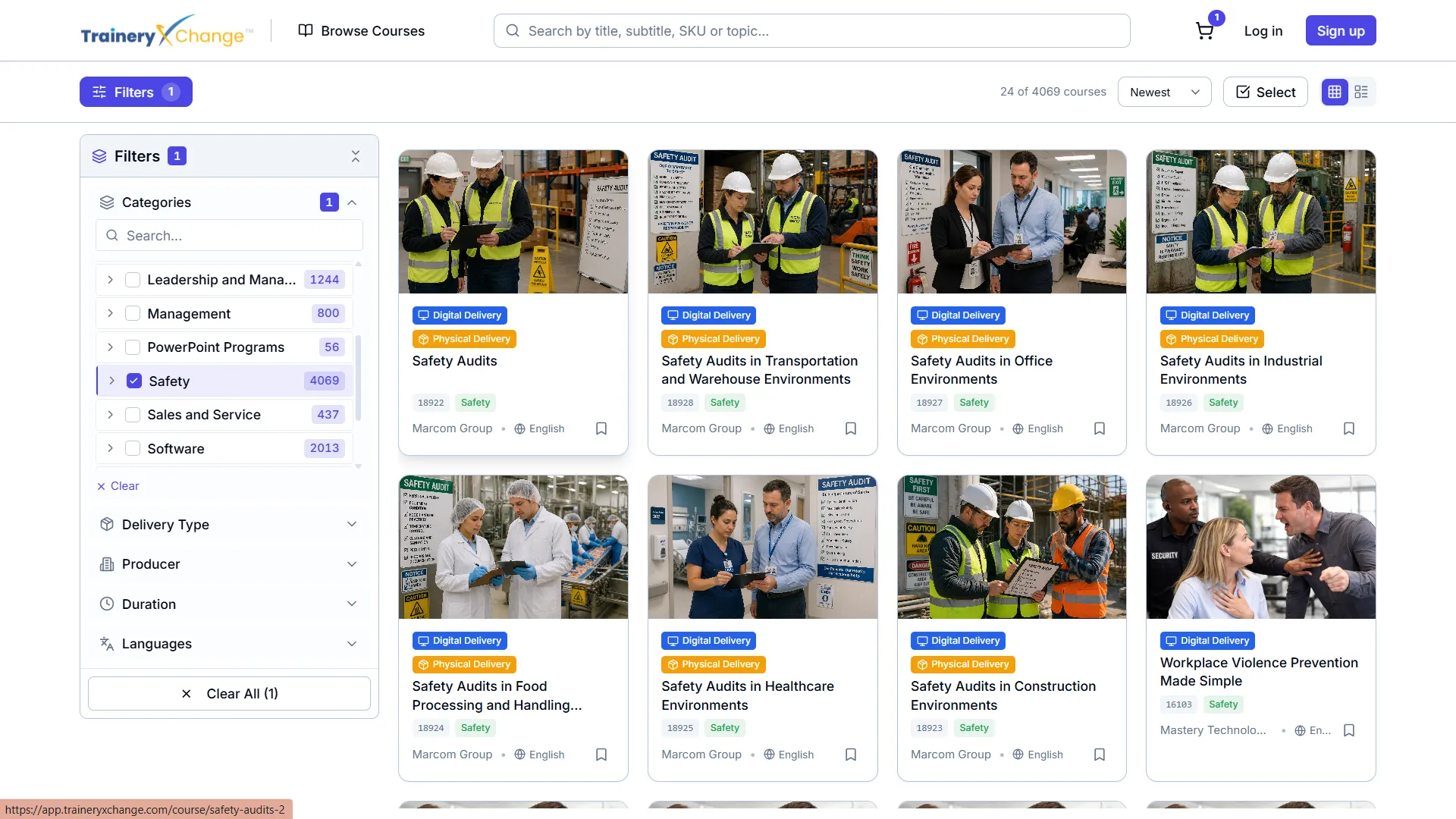
TraineryXchange offers 15,000+ training content options that teams can evaluate against role requirements and learning priorities. Supported assignment, LMS, integration, and reporting workflows depend on the course, licensing, connected systems, and configuration. Book a Demo to review the options for your environment.

Key Takeaways

  • Role-based training works best when assignments reflect documented job responsibilities, competency gaps, and applicable requirements rather than broad assumptions about a department.
  • Start with a competency map developed with role owners and managers, then connect each priority capability to an appropriate learning action.
  • Automated grouping and assignment can reduce manual administration when the LMS, HRIS, integrations, data fields, and configuration support the workflow.
  • Use a mix of licensed and internally developed content. External courses can address common skills, while proprietary processes usually require organization-specific material.
  • Measure completion alongside assessment results, manager observations, job-performance evidence, and other relevant indicators. Training completion alone does not prove performance improvement or compliance.

Role-Based Training Guide: 4-Step Implementation Framework

Assigning the same training to every employee can create unnecessary seat time and weaken learner trust. A senior engineer, sales representative, warehouse employee, and HR generalist do not have the same day-to-day responsibilities, risks, or development needs.

Role-based training addresses that problem by aligning learning with the responsibilities, competencies, risks, and development goals associated with a specific role. The objective is not simply to assign less training. It is to make each assignment easier to justify.

This guide explains how to build a role-based training program in four steps: map competencies, configure assignments, source the right content, and connect learning to development pathways.

What Is Role-Based Training?

Role-based training is a learning strategy in which training requirements are matched to an employee's job responsibilities, level, department, risk exposure, or documented capability needs.

Some topics may still apply broadly across the workforce. Others are specific to a job, location, manager responsibility, regulated activity, or development goal. A useful role-based program separates those categories instead of assuming every learner needs the same curriculum.

Why Relevance Matters

Relevant assignments can reduce unnecessary training and make the learning experience easier to understand. The actual time saved depends on the curriculum being replaced, the role design, and the organization's requirements.

For example, if a general curriculum contains ten hours of material but a documented role analysis shows that only part of it is relevant to a specific employee group, the organization may be able to remove or replace unnecessary modules. That is a planning decision, not a guaranteed productivity gain.

Engagement should also be measured rather than assumed. Relevant course titles and scenarios can improve the learner experience, but completion, participation, and job performance depend on many factors beyond course relevance alone.

Step 1: Build a Competency Map

You cannot design effective role-based training without defining what each role needs to know or do.

Work with managers, role owners, subject-matter experts, and compliance stakeholders to identify the capabilities that matter. Avoid guessing from job titles alone, because employees with similar titles can have different responsibilities.

Example Competency Matrix

RolePriority CompetencyExample Learning Need
Account ExecutiveNegotiationContract negotiation and objection handling
Customer SuccessDe-escalationManaging difficult customer conversations
Engineering LeadTeam leadershipPlanning, feedback, and delivery management
HR GeneralistEmployment complianceTraining based on applicable role and jurisdiction requirements

The matrix should be treated as a starting point. Course selection, certification requirements, and compliance training should be verified against the actual role, jurisdiction, policy, and governing standard.

Step 2: Configure Role-Based Assignments

Once roles and learning requirements are documented, determine how assignments will be managed.

An LMS and HRIS integration can support this process when the systems, data fields, APIs or file transfers, and configuration allow it. For example, job title, department, location, or manager status may be used as assignment inputs.

Dynamic Groups and Rules

Some learning platforms support dynamic groups or rules that can place learners into audiences based on HR data. A sales role might be associated with a sales onboarding path, while a warehouse role might receive a different safety curriculum.

These workflows should be tested before relying on them. HR data quality, naming conventions, integration timing, exception handling, and LMS configuration can all affect assignments. Organizations should also define who reviews changes when an employee transfers, is promoted, or has multiple responsibilities.

Step 3: Source the Right Content

Role-based programs usually require a mix of externally sourced and internally developed learning.

When Licensed Content Can Help

A training content marketplace can be useful for common professional skills, safety topics, compliance subjects, leadership development, software training, and other areas where suitable third-party courses are available.

External content is not automatically better than internal content. Buyers should evaluate subject-matter quality, publisher credentials where relevant, accessibility, language availability, licensing, update processes, LMS compatibility, assessments, and whether the course actually matches the role's need.

When to Build Internally

Organization-specific processes generally require internal knowledge. Examples include:

  • How the company sells, serves customers, or escalates issues.
  • Internal systems and workflows that differ from standard software configurations.
  • Organization-specific policies, procedures, products, and operating practices.

A hybrid model allows teams to avoid recreating generic material while still protecting the knowledge that is unique to the organization.

Step 4: Connect Training to Career Development

Role-based training can also support development pathways when expectations are clearly defined.

For example, an employee interested in a future manager role might complete learning on delegation, feedback, coaching, budgeting, or employment responsibilities. Completion can be one input into a development conversation, but it should not automatically determine promotion eligibility.

Promotion and succession decisions typically depend on job performance, demonstrated capability, business need, available roles, manager assessment, and organizational policy in addition to training activity.

Strategic Insight: Use course performance metrics alongside other evidence to understand participation and learning progress. Voluntary course activity can indicate interest, but it does not by itself identify future leaders.

Compliance Implications

Role-based training can be important for compliance training because different employees may face different legal, regulatory, policy, or safety requirements.

However, there is no universal rule that every regulator requires the same level of role specificity. Requirements vary by jurisdiction, industry, employer size, employee responsibilities, and the applicable regulation or standard.

A stronger compliance workflow documents why a learner was assigned a course, what content was delivered, when it was completed, what assessment or acknowledgment was captured, and when retraining or review may be required.

Training records can support an organization's evidence of its compliance efforts, but a completion record does not by itself make a program legally defensible or eliminate liability. Training should be one part of a broader compliance program that can include policies, supervision, reporting channels, investigations, controls, and corrective action.

How to Measure Role-Based Training

Do not rely only on completion rates. A useful measurement plan can include:

  • Assignment accuracy by role or employee group.
  • Completion and assessment results.
  • Manager observations or validated skill evidence.
  • Time to competency where the organization has a defined baseline.
  • Operational, quality, safety, or customer measures that are relevant to the learning objective.
  • Learner feedback on relevance and usability.

Business outcomes should be interpreted carefully because training is rarely the only factor affecting performance.

Conclusion: Make Every Assignment Explainable

The strongest role-based training programs can answer a simple question for every assignment: why does this learner need this training?

Start with documented role requirements, map those requirements to learning, verify the content, configure assignments carefully, and measure more than completion. That approach reduces unnecessary training while giving L&D, managers, and employees a clearer connection between learning and the work.

Ready to review role-based learning options?

TraineryXchange offers 15,000+ training content options that teams can evaluate against role requirements and learning priorities. Supported assignment, LMS, integration, and reporting workflows depend on the course, licensing, connected systems, and configuration. Book a Demo to review the options for your environment.
Frequently Asked Questions

What is the difference between a Role and a Skill?
How do we handle cross-functional training?
Is role-based training expensive?
How often should role-based training be updated?
Can one person have multiple roles?
How many roles should we define?